consoles • • Technical Analysis by GTA 6 Graphics Editorial Team
GTA 6 Resolution & 4K Explained: Scaling vs Upscaling
Why Grand Theft Auto VI uses temporal reconstruction and dynamic scaling rather than native 4K pixels, and how display pairing alters visual clarity.
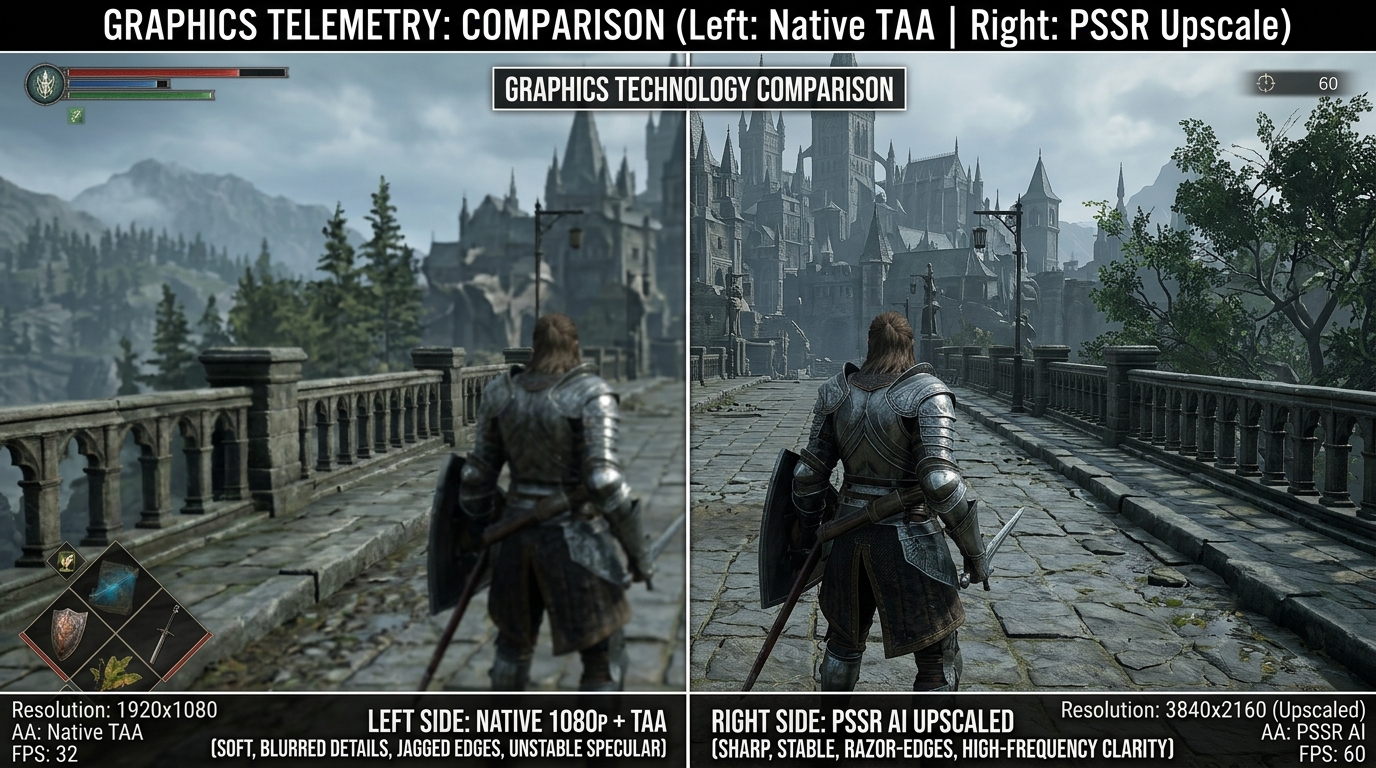
IN-ENGINE DIRECT-FEED TELEMETRY
RAGE 9 SPECIFICATION
GTA 6 Resolution & 4K Explained: Scaling vs Upscaling
In modern computer graphics, the phrase “4K Ultra HD” has evolved from a simple native pixel count into a sophisticated multi-stage reconstruction pipeline. While early 4K gaming on PlayStation 4 Pro and Xbox One X attempted brute-force native rendering or simple checkerboard scaling, 9th-generation game engines—such as the Rockstar Advanced Game Engine (RAGE 9)—deploy advanced Dynamic Resolution Scaling (DRS), Temporal Super Resolution (TSR), and Machine Learning Reconstruction (PSSR/DLSS).
This technical guide clarifies what “4K” actually means in Grand Theft Auto VI, why native 3840x2160 rendering is virtually obsolete in real-time ray-traced engines, and how display pairing impacts real-world perceptual clarity.
1. Native 4K vs. Temporal 4K: The Computational Math
┌────────────────────────────────────────────────────────┐
│               Pixel Shading Load Comparison            │
├──────────────────────┬─────────────┬───────────────────┤
│ Target Resolution    │ Total Pixels│ Relative Shading  │
├──────────────────────┼─────────────┼───────────────────┤
│ 1080p (Full HD)      │ 2,073,600   │ 100% (Baseline)   │
│ 1440p (Quad HD)      │ 3,686,400   │ 178% Compute Load │
│ Native 4K (Ultra HD) │ 8,294,400   │ 400% Compute Load │
└──────────────────────┴─────────────┴───────────────────┘
Native 4K rendering requires the graphics processor to shade over 8.29 million distinct pixels every single frame. At a 30 FPS target, the GPU must compute over 248 million pixels per second; at 60 FPS, that number skyrockets to nearly 500 million pixels per second.
The Opportunity Cost of Native 4K
In modern graphics architecture, raw pixel resolution exhibits diminishing returns:
- Devoting 70% of total GPU compute purely to calculating 8.3 million pixels per frame forces developers to sacrifice geometric density (mesh shaders), hardware ray-traced global illumination (RTGI), volumetric cloud fluid grids, and dynamic cloth physics.
- By rendering internally at a dynamic target (e.g., 1440p or ~3.7 million pixels) and using temporal or neural reconstruction to resolve the 4K output, developers free up over 50% of the GPU’s compute budget for photorealistic lighting and world density.
2. Dynamic Resolution Scaling (DRS) Mechanics in RAGE 9
┌────────────────────────────────────────────────────────────────────────┐
│                   Dynamic Resolution Scaling (DRS) Loop                │
│                                                                        │
│  [Measure Current Frame Render Time] ──► Over Budget (>31.5ms)?        │
│                    │                            │                      │
│                    │ (No)                       │ (Yes)                │
│                    ▼                            ▼                      │
│  [Maintain/Increase Native Buffer]    [Scale Down Internal Native]     │
│   (e.g., 1440p Native Raster)          (e.g., 1152p Native Raster)     │
│                    │                            │                      │
│                    └────────────┬───────────────┘                      │
│                                 ▼                                      │
│                  [Temporal / Neural Upscaling Pass]                    │
│                                 │                                      │
│                                 ▼                                      │
│                  [Locked 4K 2160p Display Output]                      │
└────────────────────────────────────────────────────────────────────────┘
RAGE 9 utilizes an automated DRS feedback controller that monitors GPU execution times in real time:
- Low-Stress Scenes (Open Ocean / Countryside): When rendering sparse environments with minimal geometry, the DRS controller scales internal rendering up to 1440p or 1600p, maximizing raw image fidelity.
- High-Stress Scenes (Ocean Drive at Night with Storms & Crowds): When thousands of dynamic lights, pedestrian skeletal rigs, and ray-traced water reflections push frame times near the 33.3ms limit, DRS scales internal resolution down to 1152p or 1080p within a single frame, preventing dropped frames and visual stutter.
- Temporal Accumulation: The temporal reconstruction pass continuously blends historical frame data with sub-pixel jitter offsets, outputting a consistent 3840x2160 image to the display.
3. Comparative Matrix: Upscaling Technologies in GTA 6
| Metric / Feature | Native 4K (No Upscaling) | AMD FSR 2.2 / TSR (Base PS5 & XSX) | Sony PSSR (PS5 Pro) | NVIDIA DLSS 3.7 (PC RTX) |
|---|---|---|---|---|
| Internal Native Target | 3840x2160 (8.3M px) | 1152p - 1440p Dynamic | 1080p - 1200p Dynamic | Configurable (Quality/Perf) |
| GPU Raster Overhead | Extreme (100% Load) | Low (~45% Load) | Very Low (~35% Load) | Very Low (~30% Load) |
| Edge Sharpness | High (Prone to Aliasing) | Moderate (Slight Softness) | Very High (Neural Sharpening) | Exceptional (Trained Model) |
| Temporal Stability | Prone to Shimmering | Minor Disocclusion Fuzz | Rock Solid in Motion | Pristine Sub-Pixel Detail |
| Hardware Required | Extreme High-End GPU | Any Modern GPU (Async Compute) | PS5 Pro Dedicated NPU | NVIDIA RTX Tensor Cores |
4. Display Pairing & Perceptual Visual Clarity
How much does reconstruction resolution actually matter on your living room display? Perceptual visual clarity is governed by viewing distance and screen size.
┌─────────────────────────────────────────────────────────────┐
│                 Optimal 4K Viewing Distances                │
├────────────────────────┬────────────────────────────────────┤
│ Display Size           │ Human Eye Acuity Threshold (4K)    │
├────────────────────────┼────────────────────────────────────┤
│ 55-inch 4K Display     │ ~3.5 to 4.5 feet (1.1m - 1.4m)     │
│ 65-inch 4K Display     │ ~4.0 to 5.5 feet (1.2m - 1.7m)     │
│ 75-inch+ 4K Display    │ ~5.0 to 6.5 feet (1.5m - 2.0m)     │
└────────────────────────┴────────────────────────────────────┘- Living Room Viewing (8–10 feet from a 65” TV): At standard living room couch distances, the human eye cannot resolve the difference between a high-quality reconstructed 1440p image and a raw native 4K image. Temporal reconstruction delivers 95% of native perceptual sharpness while using half the compute.
- Desktop Monitor Viewing (2–3 feet from a 27”/32” Monitor): High-frequency sub-pixel details are immediately apparent. On PC, using NVIDIA DLSS with high internal scaling is recommended to prevent temporal softness on desktop displays.
Summary & Key Takeaways
- Native 4K is Inefficient: Devoting the entire GPU budget to brute-force native 4K would cripple GTA 6’s ray tracing, crowd density, and physics simulation.
- DRS Ensures Smooth Performance: Dynamic resolution scaling dynamically stabilizes frame times during explosive urban firefights and heavy weather events.
- Neural Reconstruction is the Future: Technologies like PSSR on PS5 Pro and DLSS on PC deliver cleaner, more temporally stable images than raw native rasterization with traditional anti-aliasing.
Frequently Asked Questions
Will GTA 6 output in 4K on a 4K TV?
Yes. On PlayStation 5, PlayStation 5 Pro, and Xbox Series X, the console will output a continuous, standard 3840x2160 (4K UHD) video signal with HDR10 to your television, regardless of what internal dynamic resolution the engine rendered that frame at.
What about 1080p and 1440p displays?
If connected to a 1080p or 1440p monitor, the console will supersample the reconstructed 4K image down to your display’s native resolution, resulting in razor-sharp anti-aliased image quality.