graphics-comparisons • • Technical Analysis by GTA 6 Graphics Editorial Team
GTA 6 vs Red Dead Redemption 2: RAGE Engine Evolution
How RDR2 laid the groundwork for volumetric clouds, weather simulation, and character shaders in GTA 6's dense modern urban environment.
IN-ENGINE DIRECT-FEED TELEMETRY
RAGE 9 SPECIFICATION
GTA 6 vs Red Dead Redemption 2: RAGE Engine Evolution
When Red Dead Redemption 2 launched in October 2018, it set the definitive benchmark for open-world visual fidelity on 8th-generation console silicon (PlayStation 4 and Xbox One). RDR2 demonstrated what the Rockstar Advanced Game Engine (RAGE) could achieve with volumetric cloud simulation, physically based atmospheric scattering, procedural foliage physics, and intricate micro-interactions.
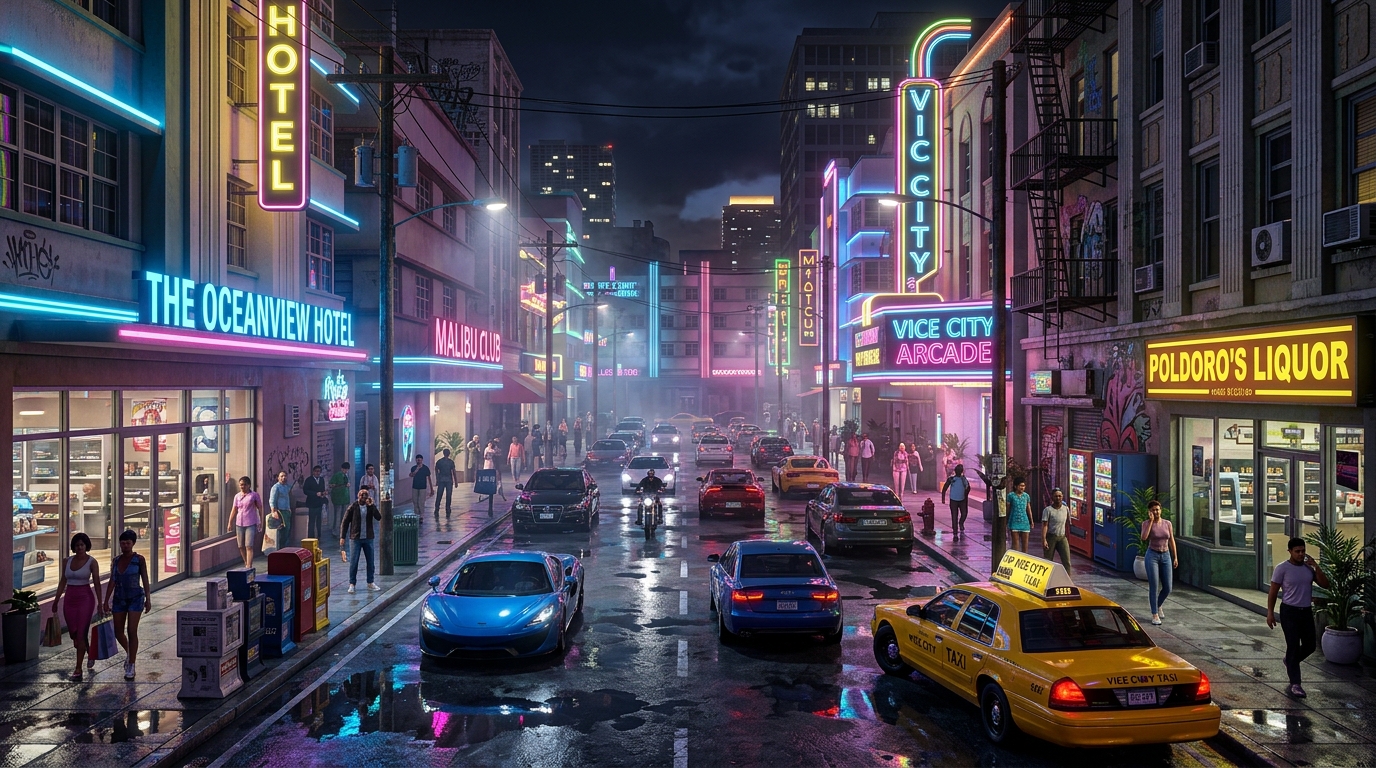
However, rendering 1899 rural frontier landscapes presents fundamentally different architectural challenges than rendering the dense, vertical, neon-illuminated metropolis of Vice City in Grand Theft Auto VI.
This technical analysis explores how Rockstar evolved RAGE from the frontier wilderness of RDR2 to the high-density urban simulation of GTA 6.
1. Engine Evolution Matrix: Frontier vs. Metropolis
| Engine Metric | Red Dead Redemption 2 (RAGE 8) | Grand Theft Auto VI (RAGE 9) | Architectural Shift |
|---|---|---|---|
| Primary Setting | Rural Wilderness, Sparse Towns | High-Density Vertical Metropolis | Horizontal to Vertical Occlusion |
| Target Silicon | PS4 (Jaguar CPU / GCN GPU) | PS5 / XSX (Zen 2 CPU / RDNA 2 GPU) | 4x CPU & 6x-8x GPU Uplift |
| Volumetric Lighting | Raymarched Height Fog & Clouds | 3D Voxelized Navier-Stokes Grid | Dynamic Hurricane & Moisture Physics |
| Artificial Light Count | ~10 - 50 Dynamic Lights per Scene | 500 - 2,000+ Dynamic Lights per Scene | Clustered Forward / RTGI Shading |
| Reflective Surfaces | Mud, Static Lakes, Wood | Mirrors, Chrome, Wet Glass, Waves | SSR to Full Hardware BVH RT |
| Movement Speed | ~15 - 35 MPH (Horseback / Train) | ~150 - 220 MPH (Supercars / Jets) | 6x Asset Streaming Throughput |
| Crowd & Traffic Density | Low Density, Complex Wildlife AI | Extreme Crowd Density, Urban Traffic | Take-Two Navigation Patent US10807008B2 |
2. Atmospheric & Volumetric Rendering
┌─────────────────────────────────────────────────────────────────┐
│              RDR2 vs GTA 6 Volumetric Pipeline                  │
├────────────────────────────────┬────────────────────────────────┤
│ RDR2 (RAGE 8)                  │ GTA 6 (RAGE 9)                 │
├────────────────────────────────┼────────────────────────────────┤
│ • 2.5D Layered Cloud Density   │ • Fully 3D Dynamic Voxel Grids │
│ • Static Sunlight Scattering   │ • Multi-Bounce Light in Clouds │
│ • Height-based Fog Fogmaps     │ • Localized Humidity & Storms  │
│ • Screen-space Fog Shadows     │ • Cascaded Volumetric Shadows  │
└────────────────────────────────┴────────────────────────────────┘
The RDR2 Volumetric Benchmark
RDR2 pioneered real-time cloud and fog rendering on 8th-gen consoles by implementing a 3D Rayleigh and Mie atmospheric scattering pipeline.
- Sun Shafts (Crepuscular Rays): Light shafts through forest canopies were calculated using screen-space raymarching through a low-resolution volumetric fog buffer.
- Cloud Formations: Clouds were modeled using layered 3D Perlin-Worley noise textures sampled over several distance slices.
- Limitations on PS4: To fit within the 1.6 GHz AMD Jaguar CPU and 1.84 TFLOPS GPU budget, volumetric buffers were rendered at quarter resolution (e.g., 540p) and reconstructed temporally, creating subtle ghosting during fast camera pans.
The RAGE 9 Urban Upgrade in GTA 6
In GTA 6, Vice City’s tropical coastline requires an entirely dynamic atmospheric fluid simulation:
- Navier-Stokes Fluid Advection: Cumulonimbus clouds and tropical storm systems are governed by fluid velocity grids that simulate the convective thermal currents of the Atlantic Ocean and Gulf Coast.
- Artificial Lighting in Volumetrics: In RDR2, atmospheric fog was illuminated primarily by a single directional light (the sun or moon). In Vice City, thick ocean fog and humidity interact with hundreds of localized light sources simultaneously—neon storefronts, police cruisers, sodium vapor streetlights, and nightclub strobe fixtures—using clustered forward volumetric lighting.
3. The Lighting Challenge: Lanterns vs. Neon Metropolis
┌────────────────────────────────────────────────────────┐
│             Urban Lighting Complexity Delta            │
│                                                        │
│  [RDR2 Saint Denis: ~50 Gas Lamps]                     │
│  (Point lights clustered in a flat 2D plane)           │
│                         │                              │
│                         ▼                              │
│  [GTA 6 Ocean Drive: ~2,000 Dynamic Emitters]          │
│  (Multi-tier vertical skyscrapers, LED billboards,     │
│   vehicle headlights, dynamic interior shop lights)    │
└────────────────────────────────────────────────────────┘
In Red Dead Redemption 2, the largest urban settlement was Saint Denis. While visually breathtaking, Saint Denis was predominantly low-rise, with lighting provided by isolated gas lamps, campfires, and interior lanterns.
- Saint Denis Lighting: RAGE 8 handled this via tiled forward shading, assigning a maximum of 16–32 point lights per screen tile.
- Vice City Nightlife: In GTA 6, a single camera view down Ocean Drive or Downtown Vice City contains thousands of distinct light-emitting surfaces: animated LED billboards, neon facade outlines, headlights casting dynamic shadows, interior shop fixtures, and specular reflections across high-gloss automotive paints.
- RTGI & Surfel Caching: Instead of relying on manual point light placement, RAGE 9 deploys hardware ray-traced global illumination and surfel radiance caching, calculating dynamic bounce light automatically from any emissive surface.
4. Materials, Shaders & Surface Physics
Skin & Subsurface Scattering (SSS)
- RDR2: Arthur Morgan and camp members featured realistic skin shading, but SSS was approximated using a single-pass screen-space blur across the diffuse buffer with a pre-integrated skin LUT.
- GTA 6: Characters in Vice City feature multi-layer epidermal and subdermal scattering with dedicated pore-level melanin and vascular mapping. In direct sunlight, sunlight pierces through earlobes, nostrils, and fingertips with photorealistic translucency.
Dynamic Wetness & Water Mechanics
- RDR2: RDR2 introduced dynamic wetness shaders where rain gradually saturated fabrics, darkened soil, and created surface puddles that dried over time based on local temperature parameters.
- GTA 6: RAGE 9 expands this with Fast Fourier Transform (FFT) ocean simulation and dynamic buoyancy physics. Coastal ocean waves interact with sloping sandbars, generating realistic whitecap foam dispersion and subsurface light caustics on shallow coral reefs. See our full breakdown in Water Simulation & Coastal Wave Physics.
5. Movement Speed & The DirectStorage Streaming Revolution
The most radical architectural difference between RDR2 and GTA 6 stems from character traversal velocity.
┌─────────────────────────────────────────────────────────────┐
│               Traversal Velocity & I/O Stress               │
├─────────────────────────────────────────────────────────────┤
│ RDR2: Max Speed ~30 MPH (Horseback)                         │
│ • HDD I/O Bandwidth Demand: ~50-80 MB/s                     │
│ • Streaming Buffer Radius: 200 - 400 meters                 │
├─────────────────────────────────────────────────────────────┤
│ GTA 6: Max Speed ~220 MPH (Supercars & Aircraft)            │
│ • NVMe I/O Bandwidth Demand: 5.5+ GB/s                      │
│ • Streaming Buffer Radius: 2,000+ meters                    │
└─────────────────────────────────────────────────────────────┘- In RDR2, maximum traversal speed was capped by horseback mechanics (~30 MPH). This gave the asset streaming engine ample time to fetch LOD meshes and uncompressed texture mipmaps from slow 5,400 RPM mechanical console hard drives.
- In GTA 6, players pilot supercars exceeding 200 MPH and military jets flying at supersonic speeds through dense skyscraper canyons.
- By leveraging current-generation PCIe 4.0 NVMe SSDs and DirectStorage / Sampler Feedback, RAGE 9 streams gigabytes of high-resolution geometry and 4K textures every second without the streaming hitches or pop-in observed in earlier open-world games.
Summary & Conclusions
Red Dead Redemption 2 established the photorealistic standard for natural environments, but Grand Theft Auto VI represents a quantum leap in computational density:
- From Wilderness to High-Density Metropolis: Transitioning from sparse rural lighting to thousands of dynamic urban light emitters.
- From Approximated Lighting to Hardware RTGI: Replacing screen-space ambient occlusion and pre-baked cubemaps with real-time hardware ray tracing.
- From Mechanical HDD Pacing to NVMe DirectStorage: Enabling extreme high-speed traversal through hyper-dense urban corridors without asset pop-in.
Frequently Asked Questions
Did GTA 6 reuse the RAGE engine build from Red Dead Redemption 2?
GTA 6 is built on RAGE 9, a complete architectural overhaul of the RAGE 8 codebase used in RDR2. While RAGE 9 retains RDR2’s core physics, animation systems, and atmospheric scattering principles, it completely rewrites the geometry pipeline (mesh shaders), memory streaming (DirectStorage), and lighting pipeline (hardware ray tracing) for 9th-generation consoles and PC.
Which game is more technically demanding: RDR2 or GTA 6?
GTA 6 is substantially more computationally demanding. While RDR2 pushed the limits of 8th-gen hardware, GTA 6 requires hardware ray tracing silicon, high-bandwidth unified GDDR6 memory, and multi-threaded 8-core Zen 2 processors simply to maintain a baseline 30 FPS target.