ray-tracing • • Technical Analysis by GTA 6 Graphics Editorial Team
GTA 6 Weather & Volumetric Lighting in Leonida
How RAGE 9 models tropical storms, Rayleigh scattering, volumetric fog voxel grids, and day-night lighting cycles in Grand Theft Auto VI.
IN-ENGINE DIRECT-FEED TELEMETRY
RAGE 9 SPECIFICATION
GTA 6 Weather & Volumetric Lighting in Leonida
The state of Leonida—inspired by the subtropical climate of southern Florida—presents unique meteorological and atmospheric conditions: severe tropical convective storms, high ambient humidity, rapid cloud formation over the Atlantic Ocean, and saturated sunset horizons.
Rendering these phenomena in real time requires far more than static skybox textures and screen-space fog. In Grand Theft Auto VI, Rockstar Advanced Game Engine (RAGE 9) introduces a unified 3D volumetric atmospheric and weather simulation pipeline.
This technical engineering breakdown dissects how RAGE 9 computes physical atmospheric scattering, volumetric voxel fog grids, dynamic tropical hurricane condensation, surface wetness accumulation, and dynamic time-of-day illumination.
1. Atmospheric Physics: Rayleigh & Mie Scattering
┌────────────────────────────────────────────────────────┐
│             Atmospheric Scattering Principles          │
├───────────────────┬────────────────────────────────────┤
│ Rayleigh Optical  │ Molecular scattering of light by   │
│ Scattering        │ air molecules (nitrogen/oxygen).   │
│                   │ Dictates sky blueness and deep     │
│                   │ orange/magenta sunset horizons.    │
├───────────────────┼────────────────────────────────────┤
│ Mie Optical       │ Aerosol scattering by larger       │
│ Scattering        │ particulates (fog, humidity, dust).│
│                   │ Generates bright halos around the  │
│                   │ sun and soft forward-scattered fog.│
└───────────────────┴────────────────────────────────────┘
┌────────────────────────────────────────────────────────────────────────┐
│ RAGE 9 Volumetric Atmosphere Pipeline │
│ │
│ [Dynamic Solar / Lunar Elevation & Azimuth Vector] │
│ │ │
│ ▼ │
│ [Compute Rayleigh (Sky) & Mie (Aerosol/Humidity) Scattering LUTs] │
│ │ │
│ ▼ │
│ [Frustum-Aligned 3D Voxel Grid (Froxel Buffer: 160x90x64)] │
│ (Samples Local Lights, Fog Density, Weather Fronts, Cloud Shadows) │
│ │ │
│ ▼ │
│ [Volumetric Raymarching Pass with Temporal Jitter & Accumulation] │
│ │ │
│ ▼ │
│ [Composite with Shaded Opaque Scene] │
└────────────────────────────────────────────────────────────────────────┘The Multi-Spectral Color Horizon
Drawing upon modern atmospheric scattering physics (notably Sébastien Hillaire’s Eurographics research on Production Sky and Atmosphere Rendering), RAGE 9 models realistic wavelength attenuation across the horizon. During noon in Vice City, Rayleigh scattering disperses short blue wavelengths throughout the upper atmosphere, producing a vivid azure sky.
As the sun sets toward the western Everglades (Grassrivers), sunlight travels through a substantially thicker layer of the atmosphere. Rayleigh scattering filters out blue wavelengths, allowing long red and orange wavelengths to dominate.
Simultaneously, high humidity levels over Biscayne Bay trigger intense Mie forward scattering, casting glowing golden halos around high-rise silhouettes.
2. 3D Volumetric Fog & Froxel Grid Architecture
In legacy games, fog was rendered using flat 2D distance planes or cheap screen-space post-processing shaders that ignored localized light sources.
RAGE 9 deploys a Frustum-Aligned Voxel Grid (Froxel Grid):
- Grid Resolution: The view frustum is subdivided into a 3D grid (typically 160x90 spatial tiles by 64 depth slices).
- Clustered Light Ingestion: For each voxel cell in the 3D grid, the engine evaluates local illumination from:
- Direct directional sunlight and cascaded shadow maps.
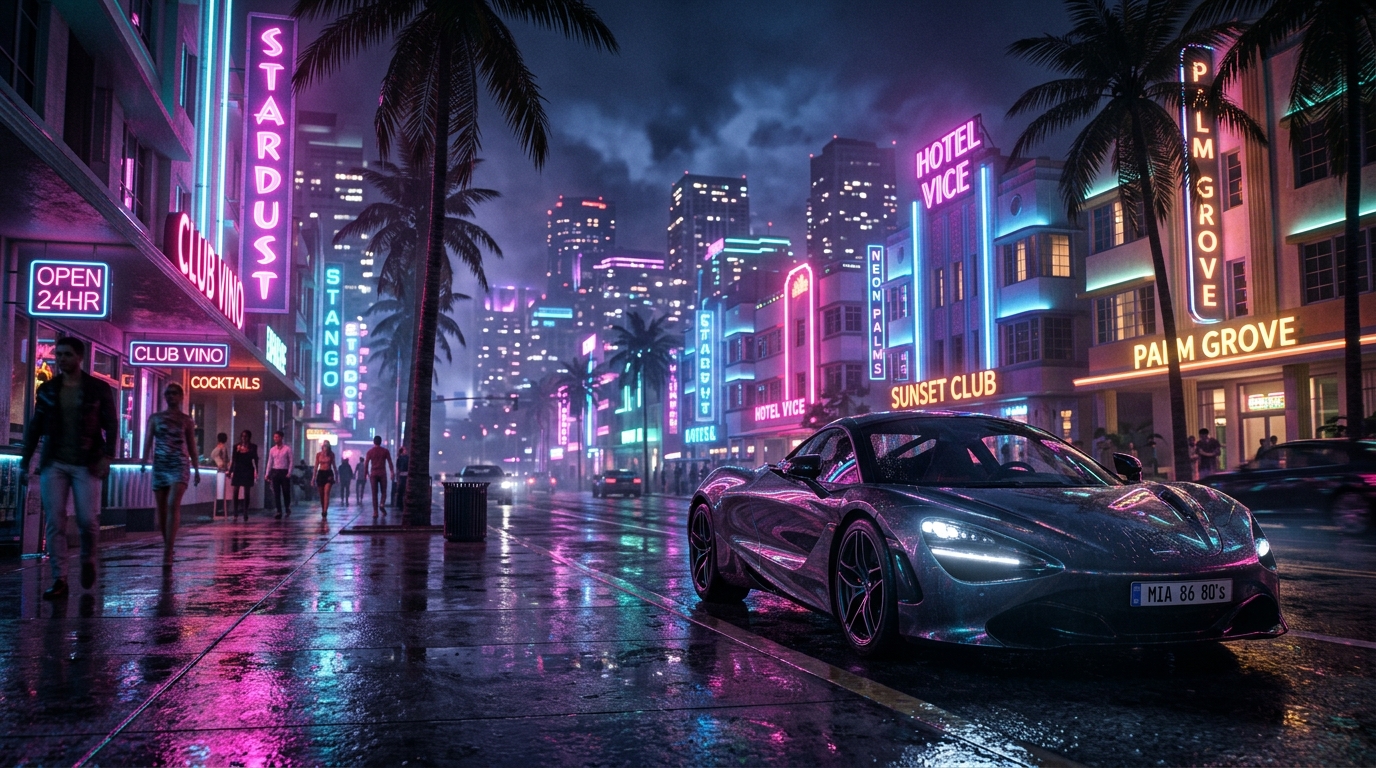
- Hundreds of localized point/spot lights (neon signs, streetlamps, emergency vehicle strobes).
- Local humidity and mist density parameters.
- Raymarching & Temporal Integration: The GPU raymarches through the froxel buffer, accumulating in-scattered light and extinction coefficients. By applying temporal sub-pixel jitter and historical accumulation, RAGE 9 renders dense, high-resolution volumetric fog at a fraction of the GPU cost of brute-force volumetric raymarching.
3. Tropical Storms, Cloud Synthesis & Navier-Stokes Fluid Dynamics
┌─────────────────────────────────────────────────────────────┐
│                 Dynamic Hurricane Simulation                │
│                                                             │
│  [Sea Surface Temperature & Evaporation Physics]            │
│               │                                             │
│               ▼                                             │
│  [Navier-Stokes Thermal Updraft Fluid Grid]                 │
│               │                                             │
│               ▼                                             │
│  [3D Procedural Cumulonimbus Cloud Synthesis (Noise)]       │
│               │                                             │
│               ▼                                             │
│  [Dynamic Cloud Shadows Cast Across Leonida Landscape]      │
└─────────────────────────────────────────────────────────────┘
Unlike static scripted weather sequences, weather in GTA 6 is governed by a dynamic thermodynamic simulation:
- Convective Thermal Currents: Warm air rising from shallow ocean shallows forms towering 3D cumulonimbus storm clouds.
- Cascaded Volumetric Shadows: Thick storm clouds cast dense, moving shadows across the landscape. Players piloting an aircraft through cloud breaks will observe high-contrast patches of bright sunlight and dark rainbands sweeping across Vice City highways.
- Micro-burst Rain Fog: Heavy downpours generate localized sheets of mist and spray kicked up by vehicular traffic, reducing visibility dynamically and diffusing vehicle headlights.
4. Puddle Dynamics, Wetness Shaders & Material Transition
┌─────────────────────────────────────────────────────────────┐
│                 Surface Hydration Progression               │
├─────────────────────────────────────────────────────────────┤
│ 1. Dry State   : High surface roughness, standard albedo.   │
│ 2. Damp State  : Roughness drops, albedo darkens (porosity).│
│ 3. Puddle Fill : Water fills geometric heightmap crevices.  │
│ 4. Full Flood  : Screen planar / RT reflections active.     │
│ 5. Evaporation : Puddles shrink according to sun thermal map│
└─────────────────────────────────────────────────────────────┘
When a tropical squall strikes Vice City, surface materials transition smoothly through a physical hydration state machine:
- Porosity & Albedo Darkening: Dry concrete and asphalt absorb moisture, causing internal light refraction that darkens surface albedo and reduces microscopic roughness.
- Geometric Heightmap Puddling: Puddles do not appear as flat texture stickers; water fills the low-elevation channels of the surface normal/displacement heightmap first (cracks in concrete, tire ruts in asphalt, depressions in sand).
- Dynamic Wavelets & Droplet Ripples: Falling raindrops generate procedural concentric ripple textures across puddle surfaces, distorting real-time ray-traced reflections of neon signs and headlights.
5. Summary & Technical Highlights
- Physical Scattering Model: Rayleigh and Mie mathematical models generate authentic subtropical sky gradients, sunset coloration, and hazy ocean horizons.
- Froxel Volumetric Grids: 3D voxelized frustum buffers enable hundreds of dynamic light sources (neon signs, vehicle strobes) to illuminate fog and humidity realistically.
- Thermodynamic Weather: Convective cloud systems form dynamically and cast moving volumetric shadows across the entire Leonida map.
- Physical Hydration Shaders: Surface wetness and puddle accumulation dynamically alter material roughness, albedo, and ray-traced reflections.
Frequently Asked Questions
Does weather impact performance in GTA 6?
Heavy rain and tropical storm conditions increase GPU load due to froxel volumetric lighting passes, rain particle simulation, and screen-wide ray-traced puddle reflections. However, RAGE 9’s dynamic resolution scaling (DRS) automatically adjusts internal pixel count to ensure framerates remain locked at the 33.3ms budget.
Are clouds in GTA 6 pre-rendered skyboxes?
No. All clouds in GTA 6 are fully 3D volumetric entities rendered inside the engine. Players piloting aircraft can fly directly through cloud banks, experiencing dynamic interior light scattering and cockpit window condensation.